Articles

Trading during High Inflation: Tips and Tricks

Trading during High Inflation: Tips and Tricks 2560 1709 Minimalist Trading - Indicators for TradingView

Trading during High Inflation
Tips and Tricks

Every trader agrees on one thing: trading during high inflation can be a tricky task.

In fact, trading in an inflationary environment requires a combination of careful analysis and a strong understanding of the market.

When inflation is high, it can cause the value of money to decrease, making it more difficult to purchase goods and services.

But how does it affect trading?

Simple, trading during high inflation can also be extremely challenging for traders because prices for assets can become highly volatile.

However, by following a few key tips and tricks, you can still be successful in trading during high inflation.

Keep an eye on interest rates

One of the main ways that central banks try to control inflation is by adjusting interest rates – the FED, the ECB, and further central banks around the world are doing exactly this.

In fact, when interest rates are high, borrowing becomes more expensive, which tends to slow down economic activity and, as a consequence, helps to curb inflation.

As a trader, it’s important to keep an eye on interest rate changes, as they have a significant impact on the value of different assets, including stocks, forex, crypto, futures, commodities, and more.

Diversify your trades

Are you a forex trader? Or maybe you only trade crypto?

Diversifying your trades across multiple assets is always a good idea, but it’s especially important during periods of high inflation. By spreading your trades across multiple assets, you can reduce the risk of suffering a major loss if one particular asset takes a short-term hit.

Watch out for currency fluctuations

High inflation typically causes major currency fluctuations, which is a risk and an opportunity at the same time. For example, knowing that a forex pair is likely going to be significantly impacted by a major event like the announcement of rate changes, it’s a fantastic opportunity to profit – we even make an entire article with 5 strategies to trade Forex news.

Don’t be afraid to act quickly

High inflation can lead to rapidly changing market conditions. As a trader, it’s important to be able to act quickly when opportunities arise. Monitor your trades closely, and be prepared to make changes if you see something that could potentially impact your profits.

In conclusion, trading during high inflation can be challenging, but it’s also a great opportunity.

By keeping an eye on interest rates, diversifying your trades, watching for currency fluctuations, and being ready to act quickly when opportunities arise, you can increase your chances of making great profits by exploiting clear and usually highly-anticipated market movements.

Achieve Success with a Minimalist Trading Strategy on TradingView

Achieve Success with a Minimalist Trading Strategy on TradingView 2144 1435 Minimalist Trading - Indicators for TradingView

Achieve Success with a
Minimalist Trading Strategy
on TradingView

A minimalist trading strategy is an approach to trading that emphasizes simplicity and avoids unnecessary complexity.

This type of strategy can be particularly useful for traders who are looking to streamline their approach to the markets and focus on only the most important elements.

The best thing?

If you are really committed to mastering it, then it’s very simple to learn!

Here are the five key elements of a minimalist trading strategy, along with practical examples that you can immediately start applying to your TradingView strategy.

1- Use a limited number of indicators

Rather than relying on a wide range of indicators, a minimalist trader will only use a few high-quality indicators that provide great support for his trading strategy. This helps to reduce clutter and makes it easier to interpret the data.

For example, among the best TradingView indicators, you might want to try the Levels and Zones, which automatically displays in real-time the major support and resistance levels and their corresponding buy and sell zones, or the RSI Exhaustion which works incredibly well in identifying new trends, trend reversals, and the overall strength of any trend.

By limiting the number of indicators, a minimalist trader can avoid getting overwhelmed by too much data and stay focused on the most important information.

2- Simplify your trading setup

A minimalist trading setup should be easy to understand and implement, with clear rules for entering and exiting trades. This can help to eliminate confusion and ensure that you are consistently following the plan.

For example, if you like to trade breakouts, you might want to use a simple trading strategy that involves buying when the price breaks above a resistance level and selling when it falls below a support level.

By keeping your trading setup straightforward, as a minimalist trader you will avoid overcomplicating your approach and will stay focused on executing your trades with discipline.

3- Don’t overtrade

Minimalist traders avoid taking unnecessary trades and focus on being selective in the opportunities they choose to pursue. This can help to minimize commission costs and reduce the risk of making impulsive, emotional decisions.

For example, as a minimalist trader, you might want to only take a few high-quality trades per day, rather than trying to trade countless times per day.

By being selective in your trades, you can increase your chances of success and avoid getting bogged down by too many losses.

4- Keep your trade management simple

Rather than using complex trade management techniques, as a minimalist trader you might use simple strategies like stop-loss orders to manage your trades. This can help to keep things straightforward and avoid overcomplicating the process of managing multiple open positions.

For example, on your TradingView chart, set a stop-loss order at a certain percentage below your entry price or below a major support to minimize potential severe losses on a single trade.

By using very simple trade management techniques, you can stay focused on the overall strategy and you will avoid getting bogged down by the details.

5- Avoid being swayed by market noise

As a minimalist trader, you don’t get caught up in the hype or media speculation about the markets, and instead, you remain focused on your own analysis and trading strategy.

You might ignore news events or market rumors that don’t align with your strategy and stick to your plan even when the market is volatile.

By ignoring distractions and staying focused on your own analysis, you can make more informed, disciplined decisions and so improve your chances of success.

To conclude, a minimalist trading strategy can be an effective approach for those traders who want to streamline their approach to the markets and focus on only the most essential elements.

By following the principles outlined above, you can maintain a clear, focused approach and increase your chances of success in the markets.

The FOMO Trap: How to Keep a Clear Head in a Volatile Market

The FOMO Trap: How to Keep a Clear Head in a Volatile Market 592 410 Minimalist Trading - Indicators for TradingView

The FOMO Trap
How to Keep a Clear Head
in a Volatile Market

The fear of missing out, or simply FOMO, is a common emotion that can affect traders and investors alike. It’s the feeling that you might be missing out on an opportunity or a potential gain if you don’t act quickly.

In the fast-paced and volatile world of trading, FOMO can be a powerful force that can drive traders to make hasty and sometimes irrational decisions.

It’s natural to want to capitalize on potential opportunities and maximize profits, but it’s important to remember that the markets are inherently unpredictable. FOMO can cause traders to chase after short-term gains or to hold onto positions longer than they should, leading to costly mistakes.

One of the biggest risks of FOMO is that it can lead to overtrading. When traders are feeling anxious about missing out on potential gains, they may be tempted to enter and exit positions too frequently, leading to excessive commissions and spreads.

This can erode profits and increase the overall risk of the portfolio. Not only that, but overtrading can also lead to a lack of focus and discipline, which are essential components of successful trading.

Another risk of FOMO is that it can cause traders to overlook important risk management strategies. When traders are focused on the fear of missing out, they may be less likely to set stop-loss orders or to take other precautions to protect their positions. This can lead to larger losses in the event of a market downturn.

It’s important to remember that even the best traders can’t predict the markets with 100% accuracy, and it’s essential to have a plan in place to manage risk.

So, how can traders avoid the FOMO trap and keep a clear head in a volatile market?

Here are a few strategies that can help:

1. Have a clear trading plan

One of the best ways to avoid FOMO is to have a well-defined trading plan in place. This can help traders stay focused on their long-term goals and avoid being swayed by short-term market fluctuations. A clear trading plan can include factors such as the types of assets you want to trade, your risk tolerance, and your overall financial goals. By having a plan in place, you can avoid making impulsive decisions based on FOMO.

2. Don’t let emotions drive your decisions

It’s important to remember that the markets can be irrational and volatile, and it’s easy to get caught up in the hype. It’s essential to keep a level head and avoid letting emotions like greed or fear drive your decision-making. Emotional trading can lead to poor decision-making and can increase the risk of your portfolio.

3. Take regular breaks

It can be tempting to constantly monitor the markets, but it’s important to give yourself breaks and take some time away from trading. This can help you stay grounded and avoid getting caught up in the hype. Taking breaks can also help you recharge and come back to your trades with a clear head and fresh perspective.

4. Don’t be afraid to miss out

It’s important to remember that you can’t catch every opportunity in the markets. It’s okay to miss out on some trades, and it’s better to wait for a high-quality opportunity rather than chasing after every potential gain. By focusing on quality over quantity, you can increase the chances of success and minimize the risk of your portfolio.

5. Use stop-loss orders

Stop-loss orders can help traders protect their positions in the event of a market downturn. By setting a stop-loss, you can limit your potential losses and avoid being caught off guard by unexpected market movements. Stop-loss orders can be a valuable tool for managing risk and will help you sleep better at night by knowing that no matter what happens, you’ll be fine.

In conclusion, FOMO can be a powerful and dangerous emotion in the world of trading.

By following a clear trading plan, avoiding emotional decision-making, taking regular breaks, and using risk management strategies like stop-loss orders, you can avoid the FOMO trap and keep a rational approach even in a volatile market.

The 7 essential Day Trading Tips for Beginners

The 7 essential Day Trading Tips for Beginners 2560 1709 Minimalist Trading - Indicators for TradingView

The 7 essential
Day Trading Tips for Beginners

Every trader started as a beginner, and ultimately became a professional by following the right Day Trading tips.

The best thing?

In this article, you will learn the 7 essential Day Trading tips that every beginner trader should know about and should start to practice as early as possible.

Why?

Because day trading can be a rewarding and lucrative activity, but it is also risky and requires discipline and a solid understanding of the markets.

If you are new to day trading, it is essential to start with a strong foundation and carefully consider your approach.

So, let’s get into the 7 essential day trading tips that you must follow and practice in order to become a successful trader.

1. Start with a demo account

Before diving in with real money, it is a good idea to start with a demo account. Simply create a free TradingView account and do some practice trading on their amazing charts to get a feel for the markets without risking any actual capital. This can be a valuable learning tool and a way to test out different strategies and see what works for you.

2. Develop a trading plan

A trading plan is a written set of rules that guides your trades. It should include your risk management strategy, as well as your goals and the criteria you use to enter and exit trades. Having a clear plan helps you to stay disciplined and make informed decisions. Your plan should take into account your financial goals, risk tolerance, and the markets you will be trading in.

3. Learn about technical analysis

Technical analysis involves using charts and other tools to analyze price trends and predict future market movements. By learning about technical analysis, you can gain a better understanding of the markets and identify the most profitable trading opportunities. There are many resources available to help you learn about technical analysis, including books, courses, and online tutorials.
Of course, our Minimalist Trading indicators, which are among the best trading indicators for TradingView, can give you the best support to get started and to consistently be profitable while you refine your trading strategy to perfection.

4. Manage your risk

Risk management is an essential aspect of day trading. It is important to set clear risk management guidelines and stick to them. This may include setting stop-loss orders to limit your potential losses, as well as using position-sizing strategies to ensure that you are not risking more than you can afford to lose.

5. Stay up-to-date

The markets are constantly changing, so it is important to stay informed about economic events and news that may impact your trades. Keep an eye on financial news and consider using tools such as alerts or newsletters to help you stay on top of market developments. It is also a good idea to stay abreast of the latest trends and developments in the day trading industry.

6. Be patient

Day trading can be stressful, and it is easy to get caught up in the excitement of making trades. However, it is important to remain patient and avoid making impulsive decisions. Wait for the right opportunities and have the discipline to stick to your trading plan. Day trading requires a long-term perspective, and it may take time to see consistent profits.

7. Seek support from other traders

Day trading can be complex, and it is important to continue learning and seeking guidance from experienced traders. In this regard, TradingView’s social features are totally free and invaluable resources to interact with fellow traders, learn from their ideas, and discuss your own personal setups.

By following these tips, you can set yourself up for success as a day trader.

However, it is important to remember that day trading carries inherent risks and there is never a guarantee of profits. Thus, it is essential to carefully assess your risk tolerance and financial situation before getting involved in day trading.

Last but not least, make sure to approach day trading with a long-term perspective and a commitment to continuous learning, and you guarantee yourself to achieve consistent success in the markets.

Top 5 features that make TradingView the Best Trading Platform

Top 5 features that make TradingView the Best Trading Platform 474 316 Minimalist Trading - Indicators for TradingView

Top 5 features that make TradingView
the Best Trading Platform

TradingView is a popular financial platform that is used by traders to access real-time market data, charts, and analysis.
It is widely considered to be the best trading platform due to the wide range of features and tools it offers to help traders make informed decisions.

Here are the top 5 key features that contribute to TradingView’s reputation as the best trading platform:

1. Wide range of financial instruments

TradingView offers a wide range of financial instruments including stocks, futures, forex, and cryptocurrencies. This allows traders to access a diverse range of markets and find trading opportunities across different asset classes.

2. Customizable charts

TradingView provides a wide range of charting tools and features that allow traders to customize their charts to suit their specific trading needs. This includes many high-quality technical indicators, drawing tools, and the ability to save and share charts.

3. Community features

TradingView has a large and active community of traders who share their ideas, analysis, and trading strategies. This allows traders to learn from others and stay up-to-date with market news and trends.

4. Advanced analysis tools

TradingView offers advanced analysis tools such as the ability to backtest trading strategies and analyze historical data. This can help traders make more informed trading decisions.

5. Ease of use

TradingView has a user-friendly interface and is easy to navigate, making it accessible to traders of all levels, from beginners to professionals.

In addition to these key features, TradingView also has a desktop app and even a mobile app that allows traders to access the platform and stay up-to-date with market developments on the go. Additionally, it has alerts and notifications that allow traders to stay informed and take action when trading opportunities arise.

Last but not least, TradingView’s charts are visually appealing and allow traders to easily see and understand market trends and patterns.

Overall, TradingView is a comprehensive and user-friendly platform that is well-suited for traders of all levels. Its wide range of financial instruments, customizable charts, community features, advanced analysis tools, and ease of use make it the best trading platform available.

It is also affordably priced, with a range of free and paid subscription plans to suit different budgets so, whether you are a beginner or an experienced trader, TradingView has something to offer to you.

Top 7 reasons for trading in 2018 - Featured

7 reasons for Trading in 2023

7 reasons for Trading in 2023 1000 667 Minimalist Trading - Indicators for TradingView

7 reasons for Trading
in 2023

One thing is for sure: everyone has its own reasons for trading in today’s Markets.

Maybe you want to be free and control your time, maybe you want to improve your wealth over time, maybe you want to build a real passive income, or maybe it is something else that motivates you.

Either way, in this article you are going to learn the Top 7 reasons why day traders, swing traders, and investors decide to put their money into the Markets every single day.

1- Do not depend on others 🙅‍♂️

One of the key reasons for trading is that you have full control over yourself.

Probably the most annoying aspect of a “regular job” is that you necessarily depend on other people: your boss, a supervisor, or even the customers.

Maybe in different ways but everyone retains some controlling power over your job, your working schedule, and your mental balance.

This usually leads to stressful situations, a bad attitude into your tasks, and an unwillingness to work just to name a few.

Trading, on the other hand, is an activity that sets you free because you become the boss of yourself.

No one else has control over your tasks, your schedule, your decisions.

For most people who become part-time or full-time traders, trading is perceived as a liberating factor and this alone is able to significantly boost their motivation and performance.

2- Prosper regardless of the economy 📈

We all know that the economy follows a cyclical schedule – there are times of expansion and times of contraction.

Consider the period between the Dot-Com Bubble and the Financial Crisis of 2007-2008: the economy initially started to grow at a moderate pace to accelerate shortly after and consistently expand through the years.

The economy grew, jobs were created and confidence in the economy expanded every single day.

Unfortunately, these were all prerequisites for a Market Crash and for the economy to significantly contract.

If it is true that the Financial Crisis (and any other economic contraction) had a devastating impact on the so-called “real economy”, it is also true that the same situation was an exceptional opportunity for Market participants.

A great advantage of trading is that you can profit when the economy grows but also when the economy contracts.

This is possible because the Markets move every single day and, as a trader, you do not care whether the price moves up or down.

You stick to the evidence of the chart and trade according to a few quality indicators.

3- Become a top trader regardless of your background 👨‍🎓

To become a physician you need a degree and many years of training. To become a professional trader you don’t need to go to college.

There is not a college that will teach you how to become a trader and recognize you such qualification.

The good news?

You can become a professional trader anytime, regardless of your background!

The web is full of free resources (just like this blog!) that will introduce you to trading and guide you through your learning process up until you become a professional trader yourself.

Moreover, during your daily Market analysis and trading activity, you can always rely on indicators that are used by a vast multitude of fellow traders and have been tested throughout the years.

Take for instance our own popular trading indicators, they are among the best trading indicators for TradingView and a countless number of fellow traders use them every single day since many years.

Whether you are a young student or you’re considering to give a new opportunity to your career, trading is the activity you can start today, regardless of your background.

4- Control your time ⏰

If you have a 9-to-5 job your free time is limited to a few hours per day.

If you’re a morning person you can cut out some time for your family and yourself during the early hours of the day while if you usually go to bed late at night you will probably find that time during the night hours.

Either way, your free time is limited and your working schedule is rather fixed.

When you trade, instead, you are free to plan your very own trading routine and take multiple times of the day for yourself.

In fact, the Market offers opportunities every moment and every single day so there is not a fixed time for everyone in which you should stay in front of the charts.

You are free to take your time and understand what trading routine works best for you!

5- Decide the risk 💆

Most people believe that trading is risky and so they tend to stay away from it or delegate the task to a trusted institution.

What they do not understand is that they can have full control over what they are risking.

It is true that in trading you can make a lot of money but you can also lose a lot. However, the amount you decide to risk is always under your control. You don’t necessarily need to put your capital at risk at first. Actually, you should not!

What you can do is to build confidence with time maybe risking $100 or even starting with a demo account where no money is risked at all.

The more you learn about trading, the more you will feel more confident, and the more you will be able to increase the risk.

This, however, is something you can do progressively and which you ultimately always have control of!

6- Markets will always exist 💹

Businesses come and go, Markets will always exist.

It’s very simple but also true.

How many popular businesses in the past ultimately failed or went bankrupt?

To name a few in the recent decade, think of Blackberry, Nokia, Kodak. They were all leaders in their respective industries but, due to lack of innovation, they ultimately went through very bad times.

On the other hand, Markets will always exist and with the companies above, Markets even profited when their business went through bad times.

Essentially, as long as we live in an open economy, the Markets will always exist, fluctuate every day, and be there for everyone to take advantage of!

7- Build a real passive income 🏖️

The last among the top 7 reasons for trading is the pinnacle of all: to build a passive income!

At first, trading seems difficult and maybe the small amounts you put to risk do not justify the whole activity.

However, the more you grow your account the more you will have amounts that you can then allocate towards longer-term investments and build a real passive income!

Does it sound counterintuitive for a trader?

Absolutely not!

When you have rather large amounts to invest you have two big opportunities:

  1. Let your capital grow while doing nothing – you just need to take a good decision at first by picking a good asset and you’re done for a very long term.
  2. Take the dividends – if you choose an asset that pays dividends you can use them to maintain your current lifestyle or you could decide to automatically reinvest them creating a compounding effect.

At this point, trading becomes a free activity that injects fresh profits into the accumulated capital.

If you think that a trader should not think of investing later on in his career, think of what Warren Buffet did during his life!

What causes a Market Crash and what you can do - Minimalist Trading - buy and sell

What causes a Market Crash (and what you can do)

What causes a Market Crash (and what you can do) 1024 934 Minimalist Trading - Indicators for TradingView

What causes a Market Crash 💥
(and what you can do)

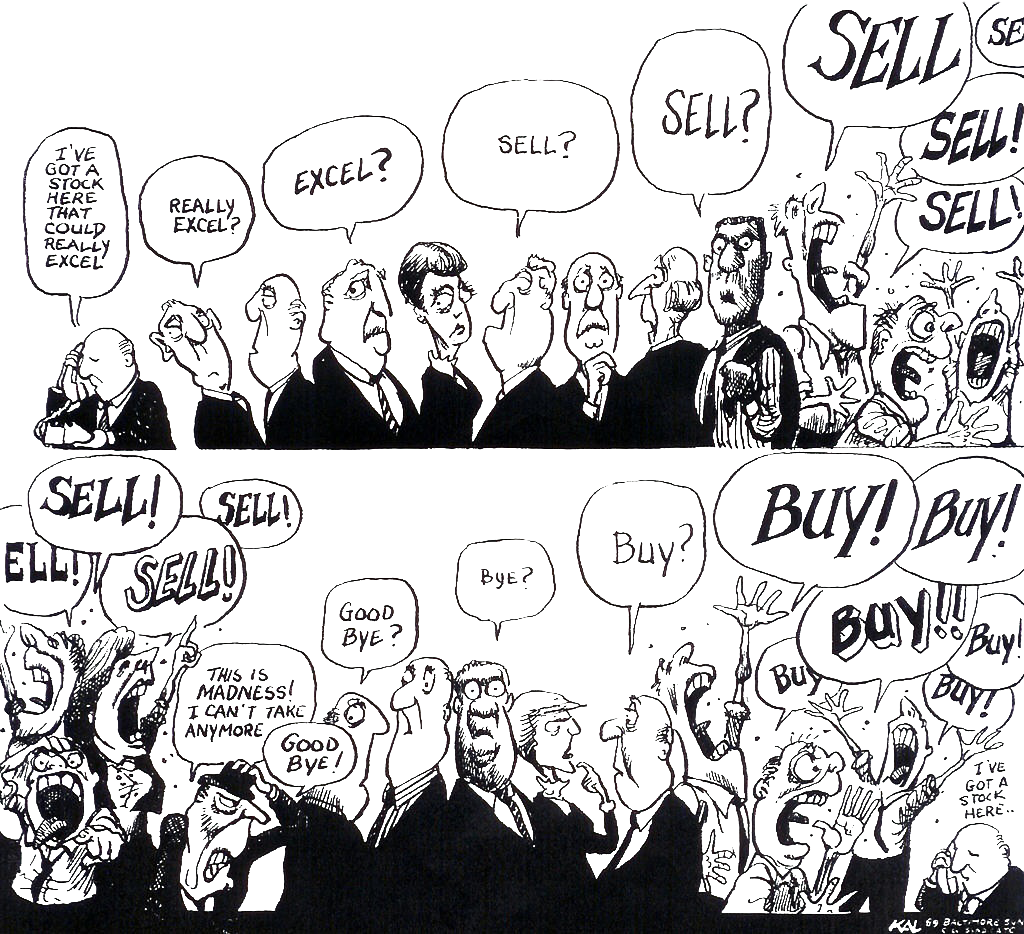
A Market Crash, also knows as Market Bubble, happens cyclically in time. For most traders and investors it’s a scary situation but it could be a great opportunity as well.

How can you identify an imminent Market Crash and how can you exploit it to your advantage?

Is it even possible?

Of course! And in this article you will learn exactly how.

What causes a Market Crash and what you can do - Minimalist Trading - buy and sell

How to identify a Market Crash

The most simple definition of a Market Crash is the following:

A steep increase of an asset’s price, not justified by the fundamentals, immediately followed by a sudden collapse.

In reality, the whole process that leads to a crash is a lot more articulated and develops over a prolonged period.

The good news?

You have plenty of time to identify a bubble while it is developing and when it ultimately bursts.

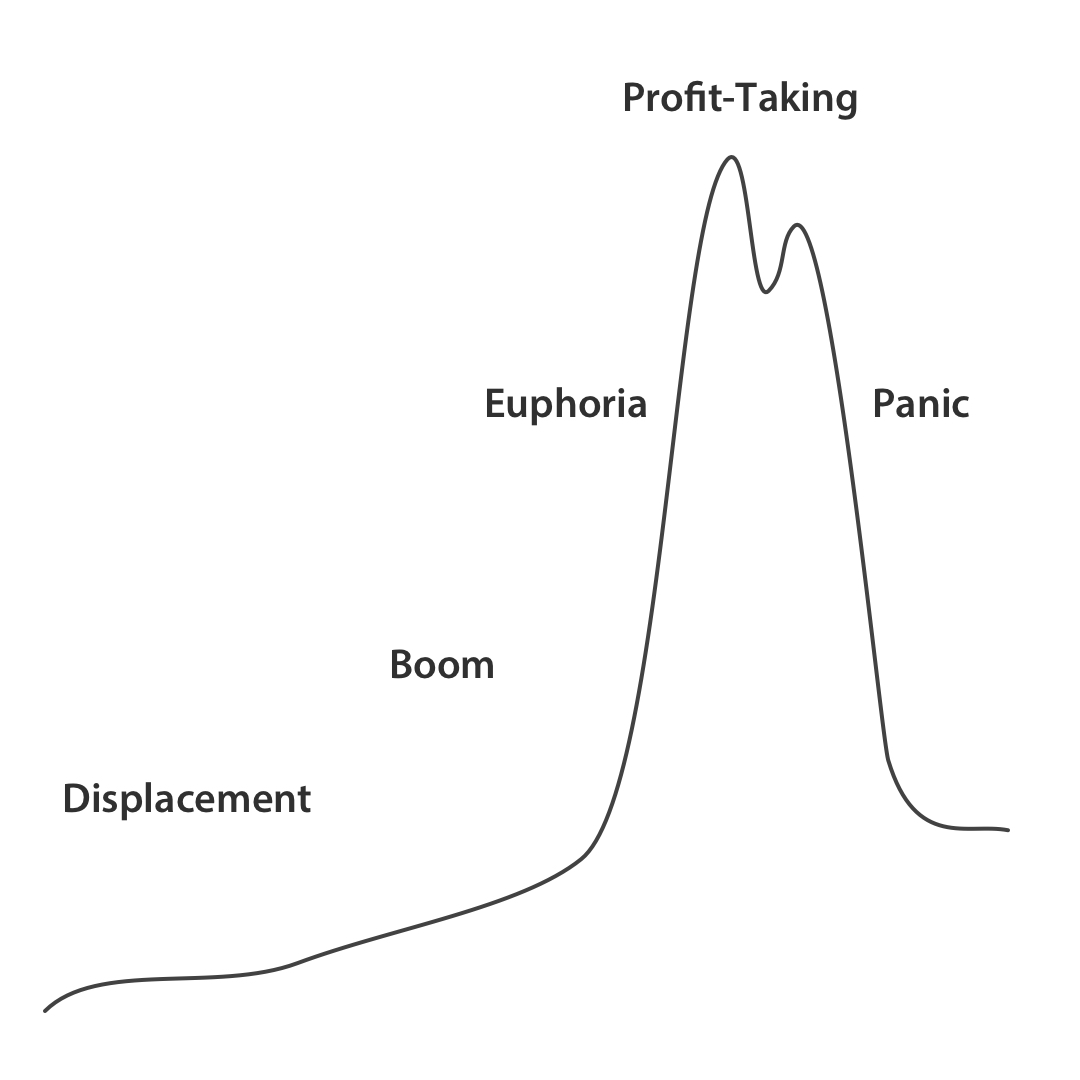
In 1986 the economist Hyman P. Minsky is his publication Stabilising an unstable economy was the first to split a bubble into 5 different phases.

  1. Displacement: a new paradigm (e.g., a new technology, a new revolutionary product) or maybe extraordinary low interest rates get the attention of the market participants.
  2. Boom: prices rise progressively and build momentum with time as more traders and investors buy the asset. The more participants get in, the more the asset gets public attention and the more further participants suffer the fear of missing out.
  3. Euphoria: prices skyrocket and trading decisions are no more justified by the underlying fundamentals but rather by greed and the fear to miss the once-in-a-lifetime opportunity.
  4. Profit-Taking: smartest participants understand the irrational situation and start to liquidate their positions knowing that once a bubble has burst it will not inflate again.
  5. Panic: prices collapse. Like for the sudden rise, the movement is completely irrational and fueled by emotions. Participants who bought the asset near its peak try to liquidate it but the demand isn’t there so prices drop even further.

What causes a Market Crash and what you can do - Minimalist Trading - Market Bubble

The Dot-Com crash

Let’s see step-by-step what happened in the early 2000’s when the Dot-Com bubble burst.

  1. Displacement: computers, internet and technology-based companies in general, revolutionized the world in the ’90s.
  2. Boom: market participants started to pour money into tech startups feeling that they would be an extremely profitable asset going on.
  3. Euphoria: speculative traders poured money into tech assets causing greed into private investors which, in turn, put even more money into companies that barely generated any profits but were offering Initial Public Offerings (IPOs).
  4. Profit-Taking: smartest participants started to liquidate their positions knowing that there was no real value in most of the underlying assets.
  5. Panic: prices started to collapse and panic did the rest. Companies with tens of millions in market capitalization became worthless within a short period of time.

What you can do in a Market Crash

Now you understand that a Market Crash is not just a sudden collapse in prices but rather a long-developing process.

Why is it so important?

Because, depending on the type of trader or investor you are, you can exploit the whole process to your advantage.

How?

Let’s suppose you are a Day Trader or Swing Trader. Not only you will profit from the Displacement and the Boom phase.

Probably, you will want to exploit as much as you can the frenzy during the Euphoria, stopping only when the Profit-Taking phase begins.

Actually, if you’re comfortable shorting a falling asset, then you will want to exploit the Panic phase as well.

What if, instead, you are a long-term investor?

Being an investor, you are not looking to maximise your profits in the short-term, hence exposing to excessive risk.

This could mean two things. You can

  • stay away from speculative assets
  • hold your positions for the long-term

If you just thought “What the heck? A bubble is one hell of an opportunity!” you should think twice.

It is true that in the short-term it could offer significant opportunities both to the upside and the downside. However, you are risking your money many times more than you normally would which, in turn, means that you are more likely to lose your capital many times more than you normally would.

Consider, for instance, Warren Buffett.

He always stayed away from any risky asset and with just 3 Minimalist Rules he was able to accumulate enough capital to become one of the wealthiest in the world.

How Risk-Reward and Win-Loss ratios define the trader you are | Minimalist Trading 005

How Risk-Reward and Win-Loss ratios define the trader you are

How Risk-Reward and Win-Loss ratios define the trader you are 1024 690 Minimalist Trading - Indicators for TradingView

How Risk-Reward and Win-Loss ratios
define the trader you are

Risk-Reward and Win-Loss ratios are key values when it comes to Trading.
By combining them together you can quickly discover what type of trader you are.
That’s not all!
Once you have a clearer picture of where you stand right now, you can then understand how to refine your current Trading Strategy and improve your overall Trading Performance.

Understanding Risk-Reward and Win-Loss ratios

What is the Risk-Reward ratio?

The Risk-Reward ratio is the capital you stand to lose (risk) in order to obtain a specific profit (reward).
If your Risk-Reward is 1:3 it means that you are willing to lose 1 in order to gain 3.
For instance, if you risk $1,000 then your expected return is $3,000.

What is the Win-Loss ratio?

The Win-Loss ratio, also known as success ratio, is instead the number of winning trades in respect to the number of losing trades.
In mathematical terms, the formula is the following.
Win-Loss = Winning Trades / Losing Trades
Assuming you made 30 trades of which 18 you won and 12 you lost, then your Win-Loss ratio is 18/12 or 1.5.
This means that you are winning 50% more trades than you are losing.
You can also easily derive your Win-Rate and Lose-Rate.
Win-Rate = 18/30 = 0.6 = 60% (you win 6 trades out of 10)
Lose-Rate = 12/30 = 0.4 = 40% (you lose 4 trades out of 10)

Summing things up…

The Risk-Reward ratio tells you how much you will earn based on how much you are willing to lose.
The Win-Loss ratio tells you how many times you will win in respect to how many times you will lose.

Combining Risk-Reward and Win-Loss

Taken singularly, the Risk-Reward and Win-Loss ratios are two essential parameters when it comes to Trading.
However, when you combine them together they are able to tell you what type of trader you are and how well (or bad) you are doing your job.
Let’s create a matrix with Risk-Reward on the y-axis and Win-Loss on the x-axis.
What we obtain are 4 distinct categories each one corresponding to one type of trader.
So, which type of trader are you?
Let’s find out.

Type 1:

How Risk-Reward and Win-Loss ratios define the trader you are | Minimalist Trading 001

Performance

Risk-Reward: LOW
Win-Loss: LOW

Characteristics of the trades

Many LOSSES and a few WINS
RISK-REWARD is always very poor

Scenario

You are losing a lot of money so you should stop trading immediately.
From a psychological point of view, it is tough but it’s hard to admit you’re wrong. You need to change your whole approach to the Market.

Type 2:

How Risk-Reward and Win-Loss ratios define the trader you are | Minimalist Trading 002

Performance

Risk-Reward: HIGH
Win-Loss: LOW

Characteristics of the trades

Some WINS but many LOSSES
RISK-REWARD is always very good

Scenario

You take many losses but when a win comes it exceeds all the previous losing trades so that you can progressively grow your capital over time.
From a psychological point of view, it is really demanding because you are losing most of the times.

Type 3:

How Risk-Reward and Win-Loss ratios define the trader you are | Minimalist Trading 003

Performance

Risk-Reward: LOW
Win-Loss: HIGH

Characteristics of the trades

Mostly WINS except for some occasional LOSSES
RISK-REWARD could be below 1:1

Scenario

You don’t expect big wins but a consistent number of small wins.
Returns below 1:1 are ok because you consistently grow your account, trade after trade.
From a psychological point of view, it’s very relaxed because you win most of the times and so you build confidence in your strategy.

Type 4:

How Risk-Reward and Win-Loss ratios define the trader you are | Minimalist Trading 004

Performance

Risk-Reward: HIGH
Win-Loss: HIGH

Characteristics of the trades

Mostly WINS except for some occasional LOSSES
RISK-REWARD is always fantastic

Scenario

You consistently grow your capital at a medium-high pace.
From a psychological point of view, it is great because you win most of the time and so you have full confidence in your strategy.

How can I become a better trader?

You now know what type of trader you are.
If you are a Losing Trader (1), then let us know how we can help you. You need to change, quickly!
If instead, you are a Good Trader (2, 3) or a Pro Trader (4), then you’re already doing great!
But it doesn’t mean you should stand still and don’t improve further.
So, how can you do it?

How Risk-Reward and Win-Loss ratios define the trader you are | Minimalist Trading 005

From Loser to Good Trader

Your losing streak is impressive and you can’t find the way out.
You are about to give up.
The good news?
You have everything to gain and nothing more to lose.
By rethinking your approach to the Markets your Risk-Reward and your Win-Loss ratios will both benefit and you will end up becoming a Good Trader (2, 3) sooner than you think.
Just let us know your situation. We’ll help you find a way out!

50 shades of… a Good Trader

There is not a single way to be a Good Trader.
In fact, as we discussed above, you could be a Good Trader with totally opposite Risk-Reward and Win-Loss ratios.
However, just because you are either in quadrant 2 or 3, doesn’t necessarily mean you should stay there forever.
Maybe you’re doing good but…
the pressure is too high!
That’s when you want to move from 2 to 3 in order to have a more relaxed approach to trading.
What you need to do is to adjust your setups in order to be less risky (lower Risk-Reward) but more consistent (higher Win-Loss).
On the other hand, what if your current trading is filled with boredom?
If you perform better under pressure, then you need to shift to more rewarding opportunities (higher Risk-Reward) by maintaining consistency under control (lower Win-Loss).
It’s not easy but every trader regularly moves along his personal learning curve.
Don’t know how to do that?
You can let us know and we’ll be happy to support you!

Becoming a Pro

If trading is your profession, then your ultimate goal is to become a Pro.
Is it difficult?
It’s not an easy thing for sure, but everything is achievable.
How?
Just split the big goal into many progressively harder sub-goals and you will end up becoming a Pro sooner than you initially expected.
Some traders reach full maturity in a few months, some others require years of trading to gain the necessary experience.
It’s not a matter of if, but when.
And when you do, you will consistently grow your capital by trading stress-free.

So, which type of trader are you? Loser, Good or Pro?
We’d love to hear that and let us know how we can help you become a better one.

Become a Minimalist Trader

3 Minimalist Rules of Warren Buffett – Minimalist Trading

3 Minimalist Rules you can learn from Warren Buffett

3 Minimalist Rules you can learn from Warren Buffett 1495 1077 Minimalist Trading - Indicators for TradingView

3 Minimalist Rules 🧘
you can learn from Warren Buffett

Warren Buffett is considered the greatest investor of all time with an estimated Net Worth around $90 billion.

Surprisingly, though, he built his fortune by consistently applying three simple Minimalist Rules and without ever breaking them.

Sounds easy?

For most traders and investors it is not but in this article, you will learn how you can apply the same three rules to your daily analysis and trading activity in order to be profitable over the long term.

1. Recognize Greed

Buffett never based his investing decisions on the extraordinary short-term performance of an asset. This approach allowed him to always stay away from speculative assets which most of the times turned out to be bubbles or, at their best, underperforming less exotic assets.

For instance, he repeatedly criticized Bitcoin because “it’s an asset that creates nothing“.

He went even further.

[…] buying Bitcoin is buying something because you expect the pool of people who want to buy it, because they want to sell it to somebody else, will grow and it’s wonderful because it does create a rising price, it does create more buyers and people think “I’ve got to get in on this” […] They did it with tulips in the 17th century.

If it is true that investors can largely agree with him, Day Traders and Swing Traders will probably see opportunities in similar situations.

Regardless of your personal opinion, there is one rule that you should understand which is to recognize greed and treat it according to your strategy.

If you are a long-term investor you will probably want to stay away from greed. On the other hand, if you’re a speculative trader, then be very mindful of the asset you’re putting your money in.

2. Be Patient

As a beginner trader, you have thought at least once that you could turn $1,000 into $1,000,000 within a short period of time and consistently continue on that growth trajectory for decades.

During your learning curve, you then realised that your expectations were just too high.

The good news?

It’s not the Return-On-Investment that was exaggerated but rather the Return-On-Time!

In essence, you should not consider the Markets as a way to get rich quick because that is gambling, not investing nor trading.

And Warren Buffett can prove you that consistent-moderate-profits are always better than quick-big-profits.

Yes, because if you exclusively concentrate on the short-term profits, you are not exploiting a few essential features of the Markets:

  • many assets appreciate with time due to the economic dynamics (e.g. see the S&P 500 performance over the decades);
  • many assets pay dividends which represent passive income regardless of the asset’s performance;
  • the leverage effect of compound interest;

3. Never Panic

Many traders lose money not because they’re wrong but because they panic when things don’t go as expected.

Do you know the reason?

It’s a natural mental behaviour which is called instant gratification. Basically, you end up taking big losses and, fearing further losses, you take small profits as soon as things are in your favour.

A similar mental approach will burn your account even before you realise you’re acting like that.

Buffett stated that if you cannot handle a negative performance you should not risk your money at all. So how does he manage Markets moving against him or even collapsing?

He uses one simple rule: don’t panic when things go wrong.

During his public talks, he made several examples recalling what happened in the recent past.

3 Minimalist Rules of Warren Buffett – Minimalist Trading – AAPL performance

AAPL performance

During the 2008 financial crisis billions of dollars were burned, the unemployment rate skyrocketed and headlines were tragic.

Over those dramatic months the world seemed to be collapsing.

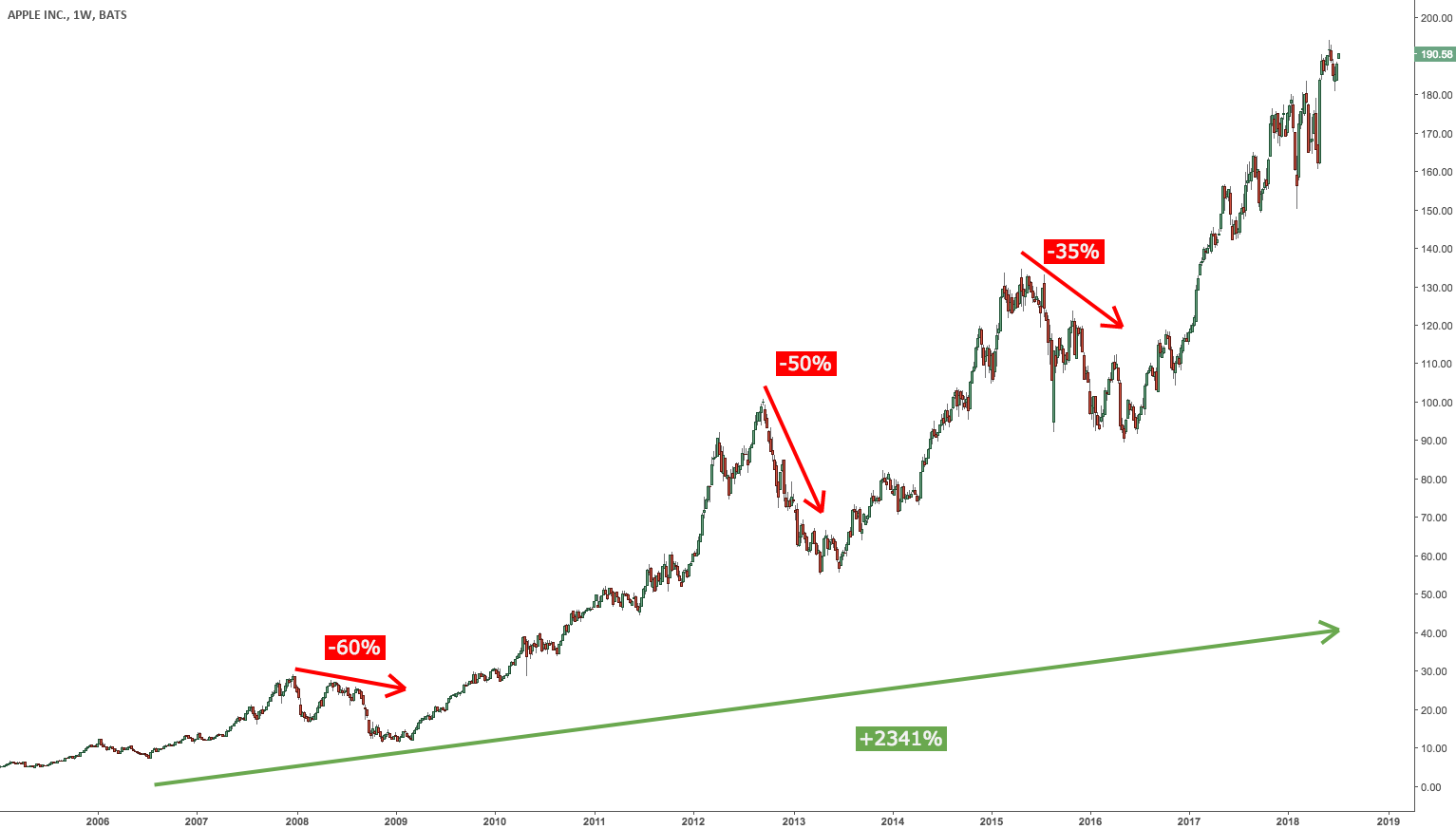
The AAPL stock dropped by 60% within 12 months and so, or even much worse, did any other tradable asset.

Try to picture this.

You invest $100,000 in AAPL in late 2007 and across the next months your capital decreases to $90,000… $80,000… $70,000… $60,000… $50,000… $40,000!!!

Your capital is going to zero and the headlines are dramatic every single day.

Can you handle it?

The answer must be YES.

How?

It’s simple. By acting objectively and without panicking.

Markets are cyclical – they expand and contract – and there’s nothing to worry about that.

From the chart above you can see that it happened again, in 2012 and in 2015.

What if you closed your position with a significant loss and missed out on the long-term performance?

An effective Trading Routine

One effective Trading Routine

One effective Trading Routine 1000 667 Minimalist Trading - Indicators for TradingView

One effective Trading Routine

We often hear that a perfect Trading Routine is what differentiates a good professional trader from an amateur trader.

In fact, without an effective trading routine, you just move from one trade to another without any order and planning. The result is that you trade by pure luck and chances are that your performance will be negatively impacted.

On the other hand, when you develop a good trading routine, you will understand the power of consistency and you will build a solid performance over it.

Let’s make one thing clear!

It doesn’t exist the “best trading routine”. There are many routines and it is you that should understand which one works best for you.

In this article, you will learn one good Trading Routine that many fellow traders have found effective and have then adapted to their personal trading style.

#1 Prepare early

Being prepared is an essential characteristic when trading.

So, are you ready for the 5:30 wake up?

I guess you’re not, in fact you don’t need to!

Preparing early doesn’t necessarily mean waking up very early in the morning.

It means being prepared before you sit down and start trading.

So, what does it actually mean?

For instance, having the right attitude before trading. If you feel it’s not your day, than you should stay away from the Markets and take the day off.

It also means knowing how to react to news events, because they usually have sudden and significant impacts on the price of an asset.

Essentially, before starting trading, you should have a clear awareness of what your about to do and be prepared to do it at your best.

#2 Update your watchlist

Not every day will offer the same opportunities.

For this reason, you should always keep a fresh watchlist with the symbols under your radar.

It doesn’t matter whether you are a day trader or swing trader, you should update your watchlist at least once per day.

In this trading routine we like to do it in the morning.

We review all the assets that we usually trade and save in our watchlist only those symbols that are set to offer a good opportunity during the trading hours.

By doing so you only need to go through a shorter list during the day and you rather concentrate on the opportunities.

#3 Highlight setups on the chart and set alarms

A watchlist is great, but it is not enough.

Once the list has been filled with all the “interesting symbols” for the day, we go through it again and highlight the setups we are able to identify.

This is a very personal step but to facilitate your trading you should always highlight the setups ahead of time.

Additionally, we set alarms so that they are triggered as soon as a setup completes.

By doing so you will remove all the stress of going through your watchlist again and again.

#4 Wait and chill

After you updated your watchlist, highlighted the setups on your chart and set the alerts, you can sit back and relax.

All you have to do is to wait for an alarm to be triggered and review the setup.

Is the setup good?

If so, then you can enter your trade but remember to always trade according to your Trading rules!

If you do not stick to your rules because, for instance, you feel very confident in a setup and you end up risking to much, you will compromise your future performance for the bad.

Just wait for an opportunity and trade it only if it respects your rules.

#5 Log, analyse and reflect

Every trading routine is not complete if you do not log and review what happened.

You could do that for every single trade or maybe at the end of the day, or at the end of the trading week.

Once again, it is very personal but you should always take the time to log a trade in a trading journal and analyse what went wrong or right.

By doing so you will not only learn from mistakes but also recognise what you did correctly and build confidence more rapidly.


We just described a simple but effective trading routine that is used every single day by many fellow traders.

How is yours?

Let us know and we’ll be happy to share it with the community.